
Access Control Vs. Traditional Locks: Which Offers Better Protection?
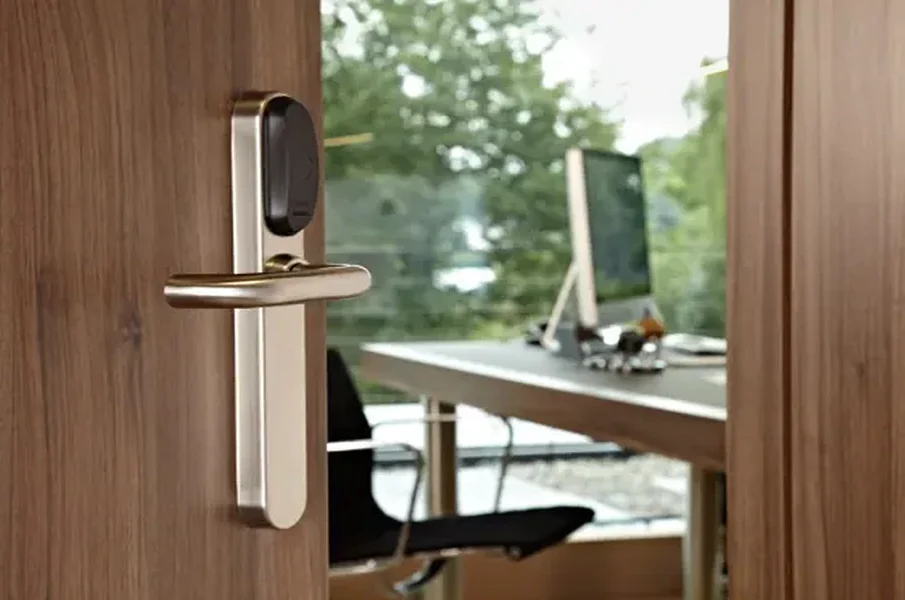
Many property owners in Hamilton still use old deadbolts. While they function, the real question is whether they provide adequate security. Compared to modern JR Security access control solutions, traditional locks appear increasingly inadequate. With unmonitored entry points and no audit trails, these locks pose risks that often go unrecognized until a problem arises.
The Problem with Traditional Locks
Key Management is a Liability
Keys can be duplicated from any hardware store within minutes. There is no way for you to know how many duplicates are around and who is using the duplicate keys now. In case an employee resigns or a tenant leaves, the normal solution is to re-key each time, which takes both money and effort.
Vulnerabilities That You Can’t See
Picking and bump keys are available more readily than you think. Simple methods are able to unlock pin tumbler locks, and simple mistakes such as keeping a door unlocked or passing on a key make things vulnerable. With the loss of the key, you lose control over access.
How Do Access Control Systems Work Differently?
Identity-Based Entry
Access control systems rely on credentials associated with a particular individual, which may be in the form of a keycard, PIN code, key fob, mobile credential, or even biometric information. All entries and exits are recorded, along with the timestamp and identity of each person who uses them. For companies operating from multiple locations in Hamilton, or properties located in busy downtown areas or the industrial area of Stoney Creek, this record can be extremely beneficial.
Permission Management
Access control systems rely on credentials associated with a particular individual, including keycards, PIN codes, and biometric information, in place of physical keys. All entries and exits are recorded, along with the timestamp and identity of each person who uses them.
Comparing Real-World Security Outcomes
Incident Response and Accountability
In traditional security, investigations begin with little evidence. Access control provides detailed reports on who accessed a door, when, and how often. This data is crucial for businesses dealing with internal theft, audits, or insurance claims.
Scalability Across Entry Points
Traditional locks have poor scalability; each new door requires a new lock and keys. JR Security access control solutions expand seamlessly from a single platform, managing any number of buildings or properties in Hamilton without added administrative burdens.
Addressing the Honest Tradeoffs
Power Dependency and Reliability
While traditional locks like mechanical deadbolts don’t require electricity, modern access control systems include battery backups and fail-safe features to cope with power outages. Many also offer manual override options to avoid lockouts.
Upfront Cost vs. Long-Term Value
The access control system costs more money upfront compared to an ordinary deadbolt lock; however, taking into account the cost of rekeying due to new and old employees, together with the risks of lack of security, its value becomes obvious.
Conclusion
In the case of a home that has only one entrance door, it is enough to use a smart key lock or a reinforced deadbolt. But when it comes to business spaces, these traditional methods would prove useless. So one must go for more advanced systems. The difference between traditional locks and access control systems lies in the fact that the former just show whether the door is closed or not, while the latter provide all the necessary information about the entrance to the door.