Can Lean Be Applied in Non-Manufacturing Environments?
TL;DR: Yes. Lean is a management philosophy built around removing waste and improving value, not a set of factory-only techniques. Hospitals, banks, software teams, schools, logistics firms, and government offices all use Lean to speed up service, cut errors, and free up time. The principles travel; only the examples change.
Mention Lean and most people picture a tidy assembly line with color-coded tool boards. That image is accurate, but it is far from the whole story. The ideas behind Lean started on the factory floor, yet the thinking applies anywhere work flows from one step to the next. If your organization has processes, handoffs, and customers, it has waste to remove, and that is exactly what Lean targets.
This article looks at how Lean reaches well beyond manufacturing, where it is already delivering results, and how service organizations can get started.
What Is Lean?
At its core, Lean is about delivering more value to the customer with less waste. Waste is anything that consumes time, effort, or money without adding value, such as waiting, rework, unnecessary steps, or excess inventory of any kind. Lean gives teams a way to see that waste clearly and remove it through steady, structured improvement.
Notice that none of this mentions machines or products. The definition is about value and waste, which is why Lean is so portable.
Why Lean Isn’t Limited to Manufacturing
Every process, whether it builds a car or approves a loan, has steps that add value and steps that do not. A patient waiting hours for a discharge, a customer stuck in a slow approval queue, a developer blocked by unclear requirements: these are all forms of waste. Lean simply asks where the delays and rework live and how to design them out.
The tools adapt easily. A value stream map works for a mortgage application just as well as for a production line. A daily huddle helps a clinic the same way it helps a workshop.
Industries Successfully Using Lean
Healthcare: Hospitals use Lean to reduce patient waiting times, streamline admissions and discharges, and cut errors in medication and records. Smoother flow means patients are seen faster and staff spend less time firefighting.
Banking: Banks apply Lean to loan processing, account opening, and back-office work, removing redundant approvals and handoffs that slow customers down.
Software: Software teams draw directly on Lean ideas to limit work in progress, shorten feedback loops, and release value in small, frequent increments rather than large risky batches.
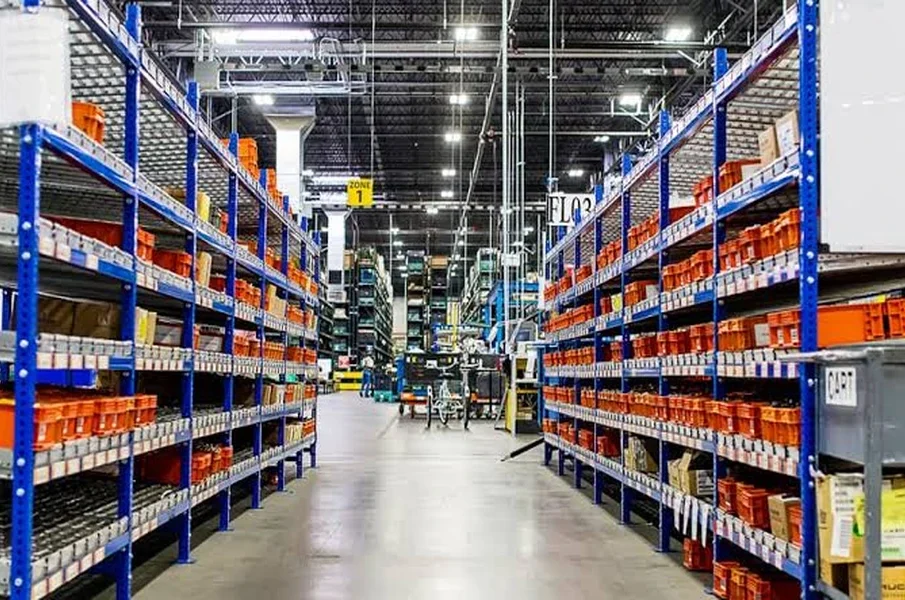
Logistics: Distribution and warehousing use Lean to improve picking routes, reduce excess stock, and smooth the flow of goods through the network.
Government: Public agencies use Lean to cut paperwork, shorten permit and licensing times, and make citizen services more responsive.
Education: Schools and universities apply Lean to admissions, enrollment, and administrative processes, freeing staff to focus on teaching and students.
Examples of Lean in Service Industries
- A clinic maps its outpatient journey and removes duplicate paperwork, cutting the average visit time noticeably.
- A bank reviews its loan approval flow and eliminates a redundant sign-off step, speeding decisions for customers.
- An IT support team introduces a visual board to cap work in progress, reducing the time tickets sit idle.
In each case the gain comes from seeing the whole flow and removing what does not add value, the same logic used on any production line.
Benefits of Lean Outside Manufacturing
- Faster service and shorter waiting times for customers
- Fewer errors and less costly rework
- Lower operating costs without cutting quality
- Higher staff engagement, since teams help fix their own frustrations
- A culture of steady improvement rather than occasional big projects
Common Challenges
Service work brings its own hurdles. Processes are often invisible, living in software or in people’s heads rather than on a physical line, so the first job is making the work visible. Output can be harder to standardize, and staff may feel that Lean is “only for factories.” Strong communication and early, visible wins usually overcome this resistance.
Steps to Start Lean in Service Organizations
- Choose one process that frustrates customers or staff
- Map how the work actually flows today, step by step
- Mark where delays, rework, and waiting occur
- Involve the people who do the work in designing fixes
- Make one improvement, measure the result, then repeat
Starting small keeps the effort manageable and builds belief. Many organizations bring in a lean consultancy at this stage to help map processes objectively and coach teams through their first improvements.
Success Story Style Example
Consider a mid-sized insurer drowning in slow claims handling. By mapping the claims journey, the team found that most of the delay was waiting between departments, not the actual processing. They redesigned the handoffs, set clear queue limits, and gave frontline staff authority to resolve simple cases. Claims moved faster, complaints dropped, and staff felt less buried. No machinery was involved, just Lean thinking applied to a service process.
Conclusion
Lean is not bound to the factory floor. It is a way of thinking about value and waste that fits any organization with processes and customers. Healthcare, finance, software, logistics, education, and government have all proven that the principles translate. If your work involves steps, handoffs, and people waiting, Lean has something to offer. The examples differ from industry to industry, but the philosophy stays the same: deliver more value with less waste.
FAQs
Can Lean work in offices?
Yes. Office processes are full of waiting, rework, and unnecessary steps, all of which Lean is designed to reduce.
Does Lean apply to hospitals?
Very much so. Healthcare is one of the most active areas for Lean, used to cut waiting times and reduce errors.
Can software companies use Lean?
Yes. Lean thinking underpins many modern software practices, especially limiting work in progress and shortening feedback loops.
What wastes exist in services?
Common ones include waiting, rework, unnecessary approvals, duplicated data entry, and information that gets lost between teams.
Is Lean expensive?
Not necessarily. Many improvements cost little beyond time and attention, since the focus is on removing waste rather than buying equipment.
How do service businesses start Lean?
Pick one frustrating process, map how it really works, involve the team, fix one thing, measure it, and build from there.
If you would like help applying these ideas in your own organization, reach out to the team at https://ribcon.com